
HIPS
at
Blinken OSA
2024 internship
In 2024, the theme of the program was Erasure – The City in the Archive (and vice versa), and it took place between January 8 and February 7. Through a series of lectures, site visits, and seminars, the students acquired a critical toolkit that allowed them to deal with memory politics and historical (re)interpretations in the public sphere, from the urban landscape to archival corpora. The city of Budapest provided the opportunity for a concrete exploration of political strategies of deception belonging to the dictatorial regimes of the 20th century up to the populist autocracy of the current times. The Archives served as a “source” documenting sensitive topical issues; in a broader, heuristic sense, it was the laboratory where analogous issues related to the relationship between documents/traces, representations, and historical phenomena were analyzed.
Students were divided into four groups that corresponded to four urban sites preselected for them as the most representative, symbolically loaded locations within the historical-political landscape of Budapest. They worked together to produce a film, an interactive digital novel, an online exhibition, and a digital guided tour by doing archival research and conducting interviews.
The internship was conceptualized and led by a team of academics and archivists at the Blinken OSA Archivum: István Rév, Ioana Macrea-Toma, Zsuzsanna Zádori and Darius Krolikowski. The course was coordinated by Adrian Matus and Fanni Andristyák. Colleagues at the Archivum who contributed academic and archival expertise in workshops, guided tours, and through advising: Oksana Sarkisova, Judit Hegedüs, Katalin Székely, András Mink, Zsuzsa Debre, Gábor Tóka, Balázs Leposa and Miklós Zsámboki.
Historians Stefano Bottoni, Rudolf Paksa, Orsolya Sudár, Gréta Süveges, Zsuzsanna Toronyi, and Hédi Turai gave lectures and guided tours about memory politics on a European level and within Hungary.
Additional workshops and masterclasses were held by: Ágnes Bakk (game design), Attila Bátorfy (data visualisation), Péter Forgács (exhibition curation), Nidhi Khurana (art and mapping), Miklós Tamási (Fortepan), and Gábor Zsigmond Papp (archival footage in film).
Project 01
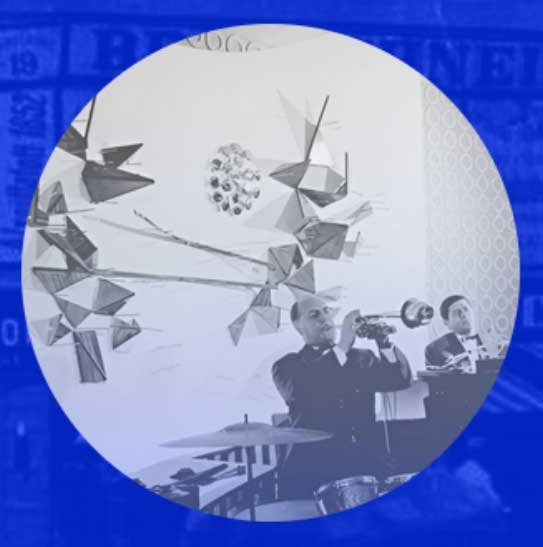
Nocturnal City: Past and Present of Nightlife in Budapest's Jewish Quarter
virtual walking tour
Created by: Lucia Baumann, Heidi Dessecker, Toby Phu Le, Kateryna Osypchuk
The Nocturnal City project is an interactive tour guided by a virtual map with audio and visual representations of six sites surrounding Budapest's seventh district, also known as the Jewish District. It can be explored in the city or in the OSA archive. The tour aims to expand the narrative of the Jewish district's history through its nightlife which persists as a continuity tying past realities to present reputations. Learn more about the districts buildings and streets and their storied pasts hosting the district’s Jewish culture and entertainment through the voices of those who lived it.
Project on Google Maps: https://goo.gl/maps/q6NgmPSMxeBzDr2M9
Project on SoundCloud: https://soundcloud.com/nocturnal-city
Project 02
(DE)CONSTRUCTION
Transition in Hungarian History (1920-1945)
online exhibition
Created by: Valeriia Muratova, Reika Kobayashi, Matia Rentflejsz, Elia Sanchez
We offer the experience of an investigation of Hungarian history (1920-1945). Our exhibition was inspired by our experiences with the House of Terror, which prompted us to create this digital tour. Although it is chronologically sequenced, our tour can be approached in any preferred manner, allowing the audience to personalize their experience and (de)construct the proposed historical period in their own way. It allows one to delve into the sensitive and tangled history of political regime transit and subsequent occupation. Our digital tour will cover the historical period from 1920 to 1945 to provide more context and allow one to trace connections and continuities between the Horthy and Szálasi regimes.
Project website: https://valeriefruitpower.wixsite.com/-de-construction
Project 03
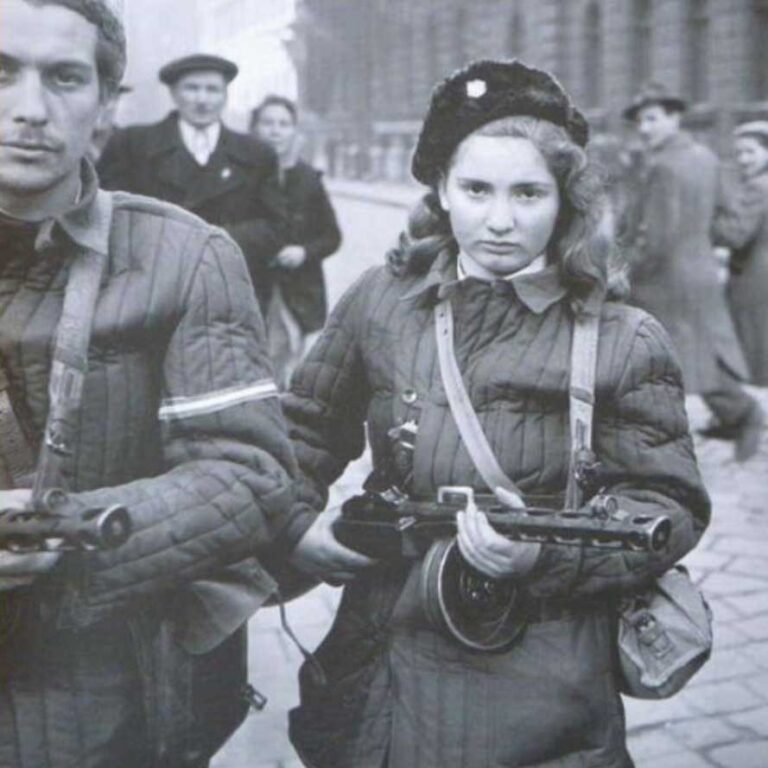
Beyond Kerepesi Cemetery: Will We Be Remembered?
interactive text-based adventure
Creators: Benjamin Schiwy, Ishan Chatterjee, Andrés Paz
Our project sparks from research on some of the graves located in the Kerepesi Cemetery. We stumbled upon a few names such as that of Erika Szeles, a teenager enmeshed in the events of late October and early November in 1956 as a student, an armed fighter, and a volunteer nurse attending to the wounded and distributing foodstuffs. We created a “choose-your-own-adventure” interactive text that loosely fits into real-life biographies, where the fictional part primarily “lures” the players into the events while contextualization is done through archival resources. The project also contains a distinct pedagogic opportunity as a relatively easy and fun digital tool for historical engagement and self-expression.
Project website: https://kerepesi.itch.io/will-we-be-remembered
Project 04
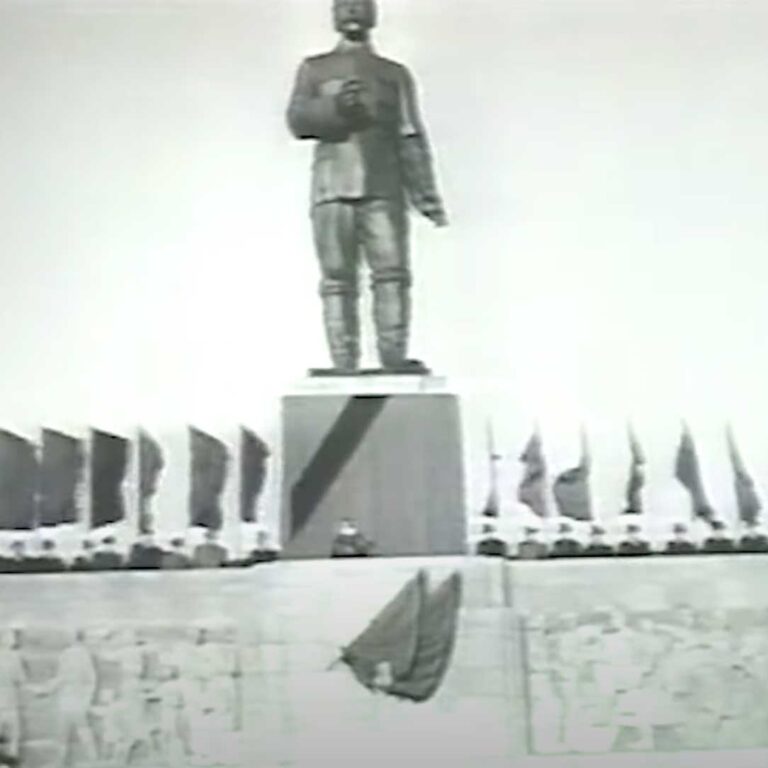
Red Ridicule
video
Creators: Maud Beard, Momina Khurshid, Ruth Woodfield, Aki Yamasaki
Memento Park, an open-air museum on the outskirts of Budapest, was created in 1993 to showcase the statues and plaques constructed during Hungary’s Communist period (1949-1989). Over the course of our internship at the Blinken OSA Archivum, our group created a short, poetic documentary to reflect on Memento Park’s role in public history. Our film suggests that the Park’s visitors may be erasing the grim realities of Communist-era Hungary by using the site in a trivial way. Through Red Ridicule, we aim to provoke varied interpretations, ultimately encouraging viewers to think critically about their engagement with the past.