
Instructors: Constantine Iordachi, Marsha Siefert
Read MoreProgram
Description
HIPS is a 120 ECTS English-language program awarding a Multiple Degree. It is organized around four thematic foci, which cover the most pressing questions historians and practitioners have been faced with in an increasingly connected, globalized world: the institutionalization of memory and the politicization of history; visual representations and medialization of history, histories of inclusion and exclusion; and entanglements between national, regional, and global frameworks of history. The Program aims to bring together historical scholarship and civic engagement in order to prepare students for careers in producing, translating, and disseminating historical knowledge through museums, journalism, archives, broadcasting, and digital communication. It also lays special emphasis on developing skills and social competences through study trips, practitioner workshops, and internships, which enable graduates to work with non-experts and civic actors in the process of disseminating historical knowledge. Students receive research training and develop individually either a Thesis or a Capstone Project.
Themes
HIPS is built around four main themes which address issues that have moved to the forefront of historical academic training in the recent past, having important cultural and political inferences.
History and the institutionalization of memory
History and the institutionalization of memory examines the role played by museums and archives in shaping historical knowledge, including the ways in which institutions of memory are used for the purposes of historical revisionism, and explores the impact these institutions have on the present.
Visual representations and medialization of history
Visual representations and medialization of history offers an inter-disciplinary take on the ways historical narratives have been visualized in the past and provides skills to interpret and develop cutting-edge contemporary media representations from documentary cinema to video games.
Histories of inclusion and exclusion
Histories of inclusion and exclusion looks at the socio-cultural, legal and political aspects of gender-based, religious, ethnic, economic, social and other forms of discrimination and violence, and explores ways of negotiating diversity and organizing socio-culturally heterogeneous societies.
Entanglement between national, regional, and global frameworks of history
Entanglement between national, regional, and global frameworks of history offers rigorous methodological training for students to organize their knowledge and research project in a transnational, comparative perspective.
Components
The program has three main, complementary components:
Coursework
Practical experience and skills
Research and research training
Coursework
Coursework consists of the mandatory core courses, the mandatory elective courses offered for each thematic track, and the elective courses.
The mandatory core courses build core theoretical, methodological, and historiographical competencies concerning the relationship of history and the public sphere. They are compulsory for all students, regardless of their chosen mobility track.
Mandatory elective courses introduce the Program’s four thematic foci. In the first and second semester, each student will have to choose at least two mandatory elective courses. These must be taken from two different thematic foci. The choice will inform their decision of the mobility track for the second year.
Elective courses covering a wide range of topics, historiographical approaches, and practical skills are offered by all Consortium Members. Most elective courses pertain to two or more thematic foci. Beyond the requirement to gather at least 40 credits towards their chosen theme, students can choose elective courses in any combination. The supervisor and the second reader from two different institutions may advise students on their individualized study tracks.
Practical experience and skills
Practical experience and skills are a core element of the Program, facilitating first-hand knowledge of historians’ engagement in the public sphere.
All students will participate in two short practitioner workshops / study visits in the first and second semesters, and will have to choose an internship placement offered by the consortium members and affiliated institutions over their entire study period. Students who opt for a longer-term internship placement in the second year of study may choose to develop a Capstone Project for their final diploma work based on the internship.
Transferable skills are meant to develop students’ competencies for historical research, further postgraduate education, and professional employment in the field of public history. They include courses in digital humanities, field work with interviews and oral history, documentary film-making, new media, academic and popular history writing, heritage management, foreign language training, etc.
Research and research training
The research and research training component of the program comprises courses specifically designed to assist students who are preparing their final theses or capstone projects, such as regular final project consultations with the supervisor and the second reader, the prospectus writing workshop, and the final project workshop and student conference.
Curriculum and mobility
The program is divided into four semesters in two years.
The first academic year is spent by all newly enrolled students at CEU (first semester) and TUFS (second semester). The intersession and joint examination period at the end of the first semester takes the form of a workshop in which students present their consolidated project plans (prospectuses) to be implemented for the duration of the program.
In the third semesters, students follow individual mobility tracks to either UniFI or NOVA, while in the fourth they can choose any of the Consortium Partners for research and internship opportunities.
In the first, third and fourth semesters, students may also choose to spend a short mobility period for the purpose of research, workshops, or an internship at INALCO as the Associated Partner. This requires the pre-approval of the Consortium Board, and the recommendation of the co-supervisors.
The final joint examination period at TUFS consists of a student conference where students present their nearly finished work, followed by the submission of their thesis/capstone project and its defense in front of a joint committee representing the institutions participating in the Consortium.
Successful graduates participate at a joint graduation ceremony at TUFS.
Indicative schedule of the four semesters
| First year | Second year | |||||
|---|---|---|---|---|---|---|
First semester |
Intersession |
Second semester |
Third semester |
Fourth semester |
Joint final examination | |
Time frame |
September – December |
January |
February – March – July |
October – January |
February – June |
July |
Hosting institution |
CEU |
CEU |
TUFS |
UniFI or NOVA |
All consortium members |
TUFS |
Learning rationale |
Coursework |
Prospectus writing workshop and presentation |
Coursework |
Coursework |
Coursework / Internship |
Final project workshop |
Study visits / Practitioner workshop |
Study visits / Practitioner workshop / Internship |
Study visits / Practitioner workshop |
Internship |
Final project research and writing |
Joint student conference | |
Skills |
Skills |
Skills |
Final project consultations |
Defense and graduation | ||
Courses
Mandatory courses, 2020/21, first semester
HIPS prospectus course – January intersession
Instructor: Marsha Siefert
Read MoreMandatory elective courses, 2020/21, first semester
Historical Politics: Debating the Twentieth Century
Instructor: Constantine Iordachi
Read MoreHistory in the Visual Mode: Methods and Practices of Documentary Storytelling
Instructors: Jeremy Braverman, Oksana Sarkisova
Read MoreInclusion and Exclusion Perspectives on Humanity and Race in Modern European History of Ideas and Science
Instructors: László Kontler, Emese Lafferton
Read MoreComparative, Transnational and Global Histories: Rethinking Geographical and Temporal Scales
Instructor: Balázs Trencsényi Teaching assistant: Una Blagojevic
Read MoreElective courses, 2020/21, first semester
“Is Coronavirus China’s Chernobyl?” Historical and Public Discourse about Hidden Phenomena/ Enemies
Instructor: Ioana Macrea-Toma
Read MoreJewish Memory from the Exodus to the Holocaust
Instructor: Carsten Wilke
Read MoreScience and the Nation
Instructor: Karl Hall
Read MoreMuseums and Public History
Instructors: Matti Bunzl, Nathaniel Prottas
Read MoreMemory in Public Spaces (Including archives)
Instructor: István Rév
Read MoreInternship
A central feature of HIPS is the entanglement of academic and professional socialization. This requires a curriculum which contains both institutional visits (to archives, museums, and cultural foundations) and internship opportunities. In order to make this experience both academically rewarding and a possible opening to future employment, HIPS also delivers skill-building courses and practitioner workshops with professionals in the field of public history.
Every member of the Consortium offers internship opportunities for the students. During the first term at CEU, students collaborate with the Vera and Donald Blinken Open Society Archives (OSA), one of the most innovative institutions dealing with contemporary history in Europe. Students receive a course on archival and evidentiary practices and theories; as interns, they have the opportunity to spend a short time at OSA in order to learn basic archival skills and understand the active role that archives play in processing and transmitting historical memory. During the second year, internships are important components of the curriculum as Consortium members offer a variety of placement options. Students receive mentors at the site of their internship and there is correspondence between the host institutions and the institutions offering these internships in order to monitor the process.
In the third semester, while at either UniFi or NOVA (according to their mobility track), students have opportunities to intern at a plethora of respected institutions. In Florence, students are able to intern at the Historical Archives of the European Union, the Laboratory on Cultural Heritage (LIEC) of SAGAS Department, the Archaeological Laboratories San Gallo (University of Florence), the Alinari Archives of Photography Florence, the Laboratory for Social Geography (LaGeS) of the University of Florence, the Italian Geographical Library (UniFi), the Historical Archive of Florence City Hall, and the Museum of Resistance and Deportation (Prato). In Lisbon, students can intern at the Calouste Gulbenkian Museum, the Museum of Aljube Resistance and Freedom, and the Cinemateca Portuguesa. During the fourth semester, in addition to the opportunities above, students can request to receive an internship at INALCO, an Associate Partner of the Consortium, in Paris and at the Wien Museum in Vienna. With regards to their final projects, students are encouraged to find their own internship opportunities.
Student Profiles
Lorem ipsum dolor sit amet, consectetur adipiscing elit. Ut elit tellus, luctus nec ullamcorper mattis, pulvinar dapibus leo.
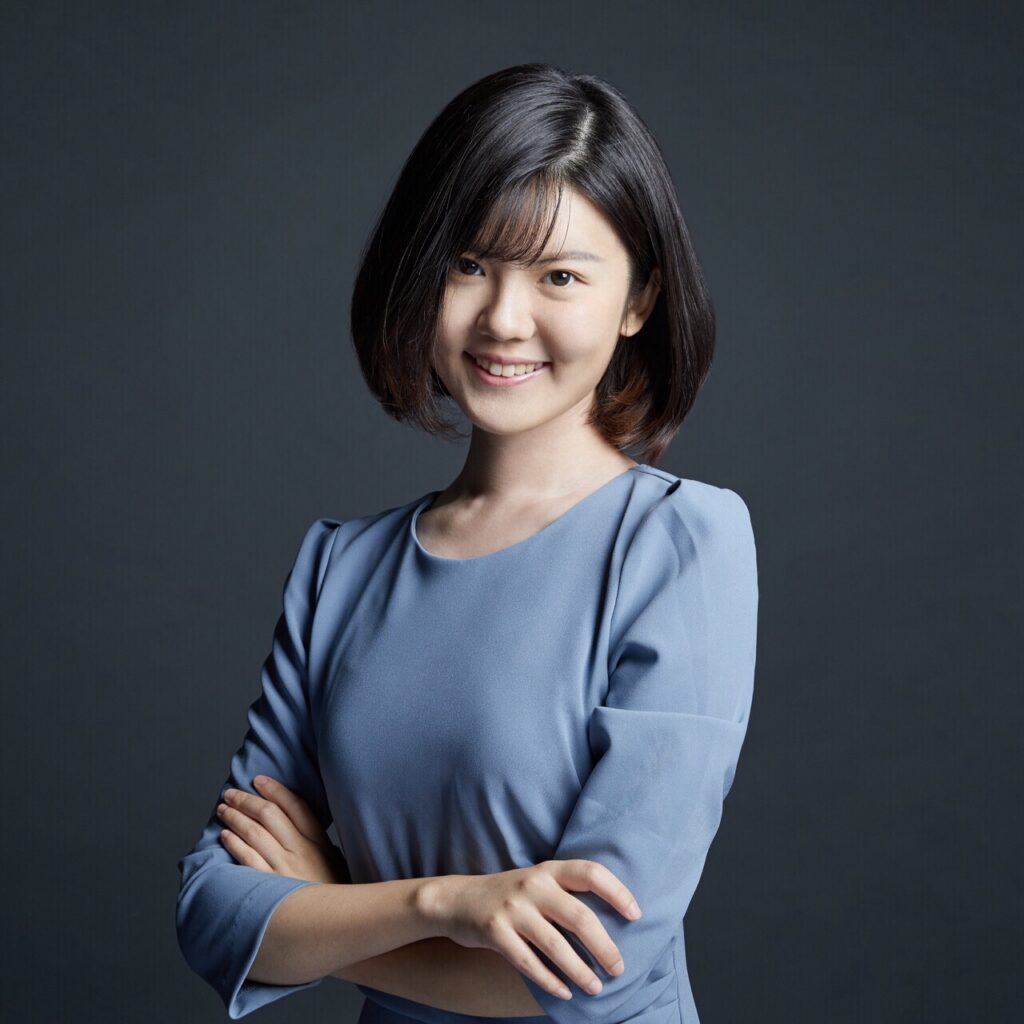
Chen Xingtong
Xingtong graduated with an MA in Euroculture (2018-2020) from Università degli Studi di Udine (Italy) and Université de Strasbourg (France), and with an BA in Financial Journalism from Central University of Finance and Economics in China. For her previous MA, she wrote her thesis on How the Japanese revitalized German culture in Tsingtao. Now her academic focus is on the public history of business network construction.
Tan Tzy Jiun
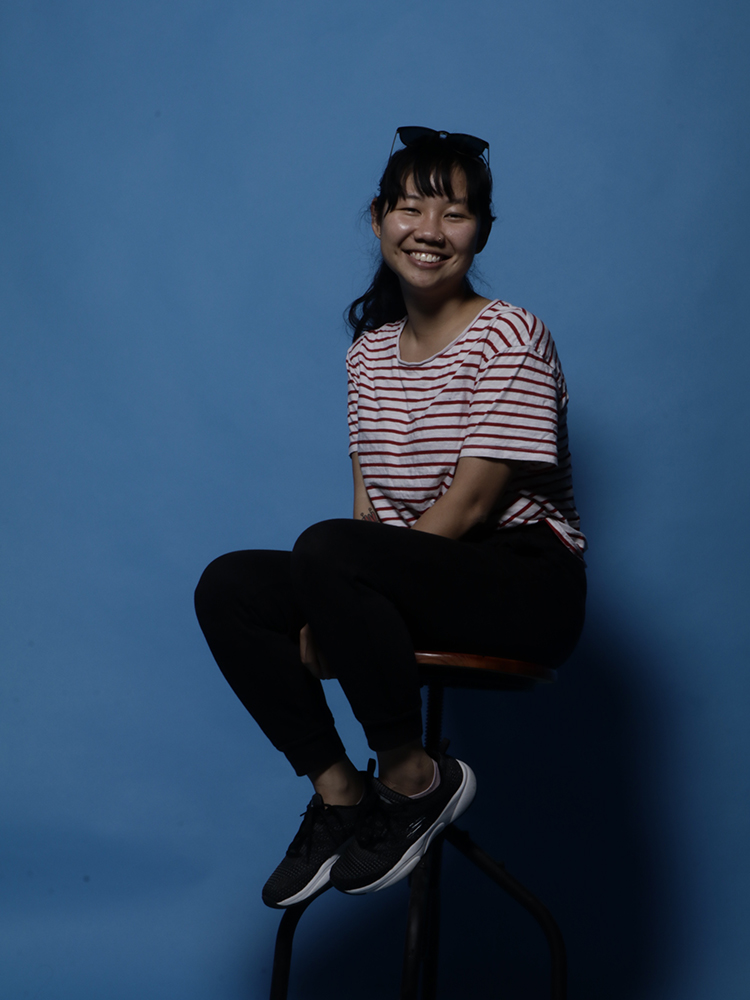
Tan Tzy Jiun is a practicing poet, historian, and theatre maker. She researches the Malayan insurgency, poking at questions the Malaysian state doesn’t want her to ask. She is also interested in human-animal histories, the Cold War, and military histories. She is a co-creative director at Exit 11 Performing Arts, where she writes and performs work based on her research. An alumna of New York University Abu Dhabi, Jiun is affiliated with the NYUAD Global Asia Initiative, developing syllabi in environmental history.
Jordan Voltz
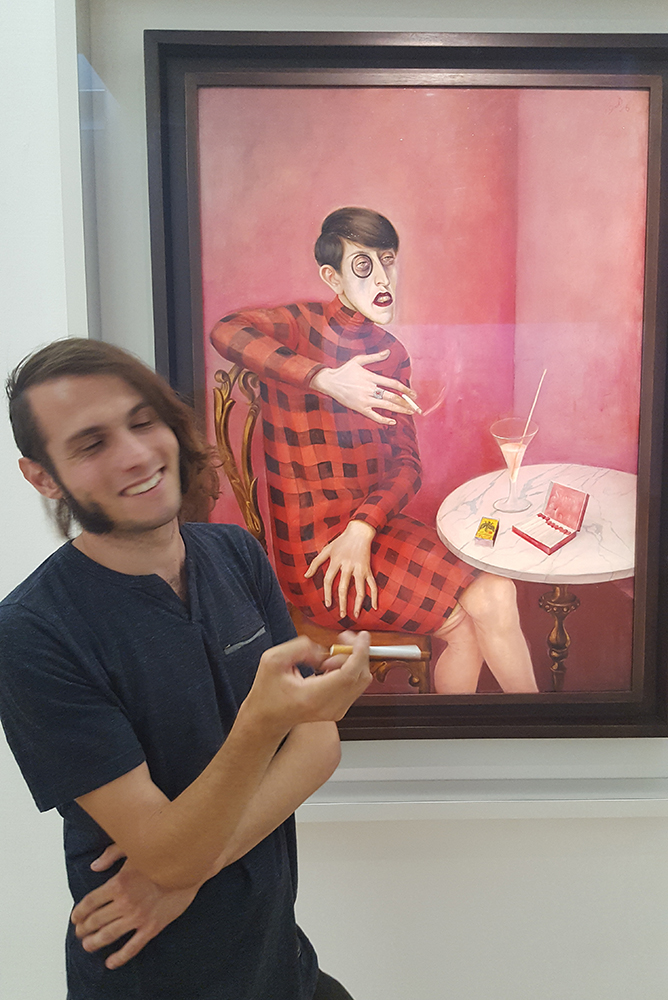
Jordan graduated with an MA in Medieval History from CEU and a BA in English from University of Puget Sound. His academic focus is on medievalism and he is currently researching depictions of the Middle Ages in video games from the US and Japan. For his previous MA, he wrote his thesis on the changing meaning of the Árpád stripes (Árpádsáv) during the Middle Ages. Recipient of the Zvetlana-Mihaela Tanasa Memorial Fund (CEU, 2020) and Sandler Critical Essay Award (UPS, 2016).
Marita Arnold
Marita did her Bachelor of Arts (Hons.) at the University of New South Wales, Sydney. After graduating, she spent several years working in language education in Australia, Indonesia and South Korea. Marita is interested in migration histories and in exploring connections between Australia, South East Asia and East Asia. She is also interested in the public roles historians can play in community engagement and education.
Clare McCarthy
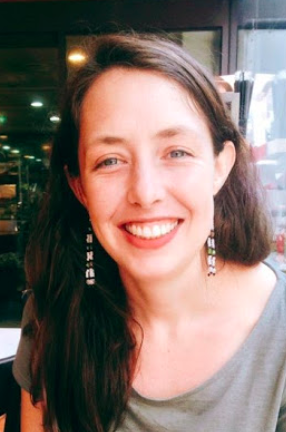
Clare graduated with a Bachelor of Civil Law degree from University College Dublin and decided to pursue history at graduate level. Her research focus is the history of commemoration practices in Ireland, especially in the context of the current Decade of Centenaries programme which has brought memorialization of the past to the forefront of Irish public debate.
Eri Nishida
Eri received her bachelor’s degree (Language and Area Studies) from Tokyo University of Foreign Studies. Her research topic mainly focuses on pedagogy, especially language education and education with digital devices. She has obtained a Japanese English teacher license in her undergraduate program.
Bakbubu Ibraim Kyzy
Bakbubu graduated with BA in International Studies, with dual concentration in East Asian Studies and Diplomacy, from Ewha Woman’s University. Her academic focus is on reconciliation history and post-colonial studies. Bakbubu’s main interest lies in engaging general public, especially, youth in shaping public history.
Jefferson Mendez
Jefferson R. Mendez is a faculty member at the Department of History, Polytechnic University of the Philippines where he also received his Bachelor of Arts in History and awarded as the Most Outstanding Graduate for 2015. Last year, He completed His Master in Asian Studies major in Northeast Asian Studies with a specialization in Japanese Studies under the CHED Faculty Development Program scholarship in the Asian Center of the University of the Philippines. Mr. Mendez has also presented his research in various parts of the Philippines and abroad. Last 2018 and 2019, He was part of a research project organized by the University of Nottingham in UK and attended the 14th Singapore Graduate Forum in Southeast Asian Studies organized by the Asia Research Institute of the National University of Singapore respectively. He received travel grants from European Research Council (ERC), Henry Luce Foundation and the Japan Foundation to present his research works in UK, USA, Singapore and Indonesia. He is currently taking a Master of Arts in History in the Public Sphere (HIPS) program in various Universities in Europe and Japan as an Erasmus Mundus scholar.
Catarina Letria
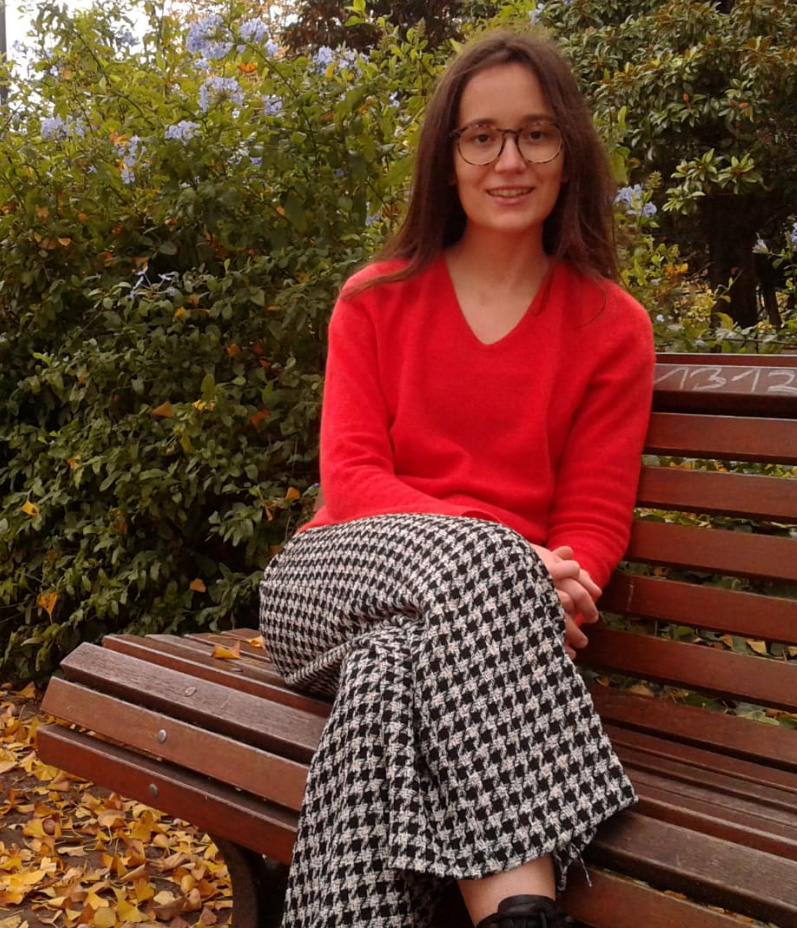
Catarina graduated with a BA in History from Nova University of Lisbon, Portugal. During her bachelor program, she spent an Erasmus program semester in Paris, at Université Paris VII – Denis Diderot. After graduating, she completed the curricular section of the Brazilian Studies MA at University of Lisbon, and worked as an exhibition guide at the Portuguese National Parliament. Her interests focus upon post-colonial studies, and how the Portuguese colonial past is being currently debated in Portuguese society.
Elnura Huseynova
Elnura graduated with a Bachelor’s Degree in International Relations from the Academy of Public Administration (Azerbaijan). Her academic interests include the institutionalisation and visual representation of history. She is particularly interested in how communities can come to terms with their difficult past in the context of the Nagorno-Karabakh conflict.
Sita Magfira
Before pursuing this program, Sita worked in Yogyakarta, Indonesia, as a writer and researcher
focusing on Indonesian contemporary art. She is mainly interested in the relation between arts
and society. For her final project, she aims to study the memory of the 1965 Indonesian exiles
community in Central Eastern Europe through their art collections.